Search This Blog

Tuesday, 16 August 2011

White Faced Darter etc:

Just a few more images from the visit to photograph White Faced Darter at the end of July, I may have used an image more than once but it's been confusing sorting them out  so this is the last 
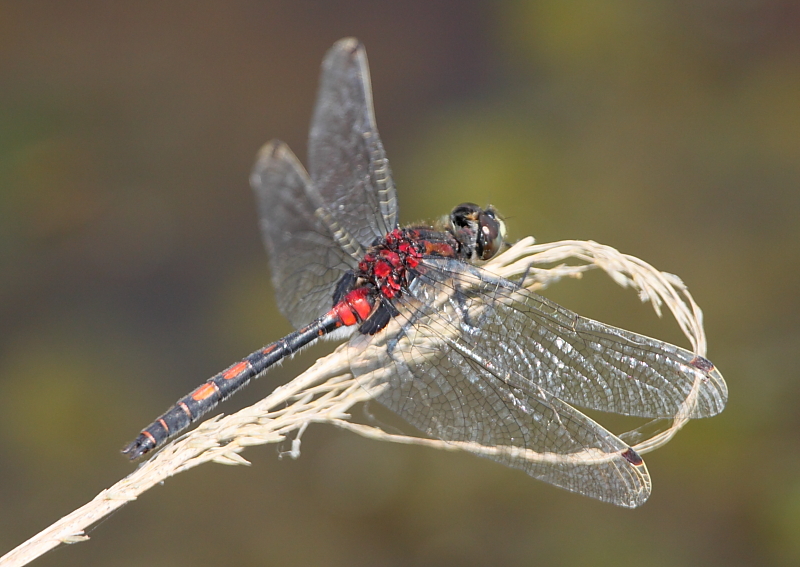
This is the ideal perch for a White Faced Darter prominent ,giving good visibility  and easily absorbing the suns rays  which seems so essential to their lives . I can only assume these positions are  held by the more mature males.
Despite their name other features of this species is very attractive,the red on the Thorax and sections of the upper Abdomen the dark spots on the wings  and the erratic flight all add to the appeal.
Black darter ,despite all the shots I don't seem to have captured a female/Imm male  of the White Faced Darter  they could have been dispersed in the Heather .
A pair of WFD coupled in the tall grass was as near as I could get
I was keen to get a close up of the face , it seems to add some personality to them, but they nearly always either faced away or to the side
This is probably the best I got of the facial expression , there was no chance of getting close with my compact camera.

This is the same perch as the first photo which was very popular , if I could do it again I would set the tripod and camera at this and just wait , but it would be hard with so much else going on.
These are Emerald Damselflies  unable to get them both in focus I had to focus from the Male to the Female, an attractive species seen at many ponds .


These Water Boatman  where constantly on the move swimming (or rowing) upside down ,investigating anything that touched the surface tension of the water , a Common Blue Damselfly made this mistake and was grabbed from below , I put the camera up to get a shot but it just flipped over and dived down ,fascinating to watch.
This Water Boatman turns over to dive
Again the coupled WFD from the previous photos having moved ,still face on but just to far away to get them both in focus.


Black  Darters coupled 


Four Spot Chaser
And another Four Spot Chaser

Thursday, 11 August 2011

Southern Hawker

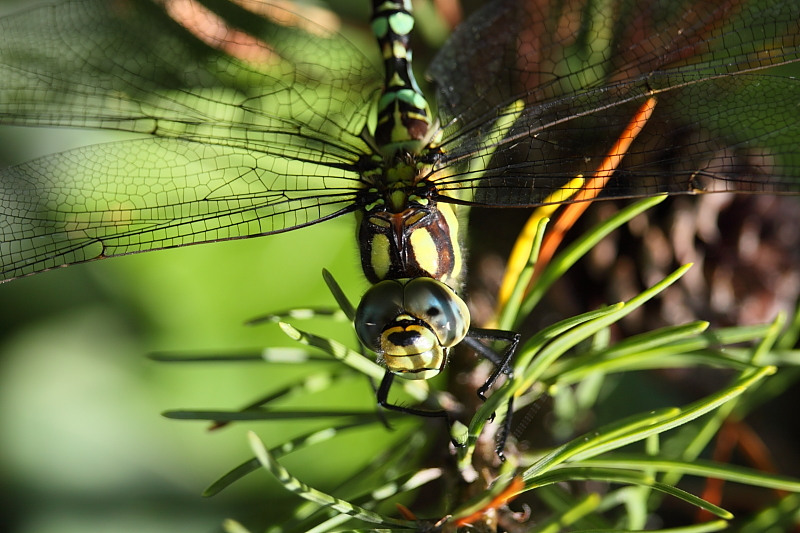
As I have already said this year has been very poor for Dragonflies ,I have spent a lot of time visiting and re-visiting sites that should be good for the larger Dragonflies , Emperors in previous years have been located at most ponds of reasonable size but this year the numbers are very much reduced ,this is just my personal observations . The Hawkers can be found anywhere so I always keep my eyes open  when in any sheltered sunny area,  I came across this Southern Hawker Aeshna cyanea in just such a situation it crossed my path but low down  hawked back and forth along a conifer hedge then settled  as the sun went behind a cloud (yes there was some sunshine involved )  so several shots later the sun returned  took a few more before it was off patrolling again .
 I don't know if this is a camouflage technique resting on this vegetation , but I have to concentrate on it's position as it lands or it's lost.
 I like Southern Hawkers they can be very inquisitive at times allowing good views and will settle at some stage.


 I just turned this shot to show the facial expression and features of very large compound eyes ,the antenna and the mandabiles forming the chin also the looks like a smile facial expression .
Close up of the upper and just behind the lower appendages used to clasp the female

Tuesday, 9 August 2011

Holywell Pond 8-8-2011

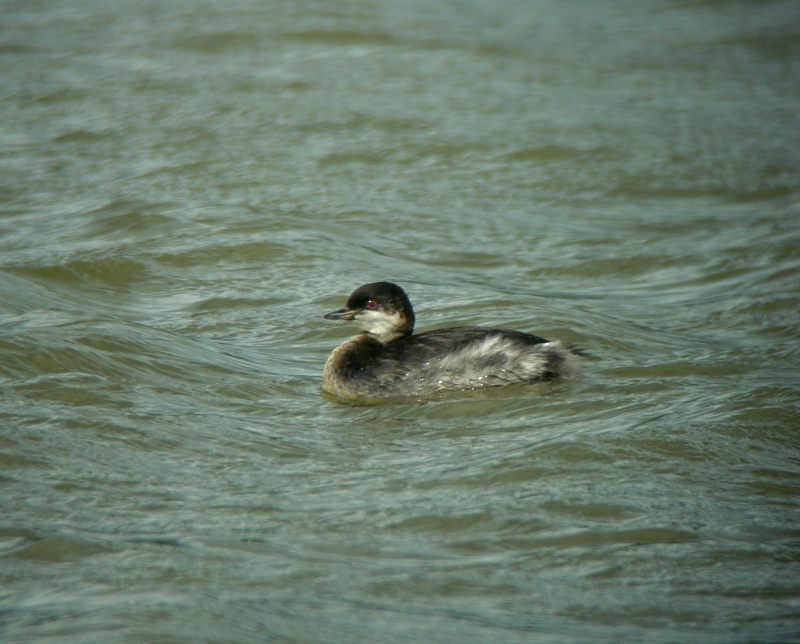
A couple of hours at Holywell yesterday  two black-necked Grebes at the west end , numerous Little Grebes  still feeding various ages of young , a Sparrowhawk took something  from the feeding station and landed across the pond it was so silent ,no waders to get to grips with , but a Juvenile Mediterranean Gull following the plough with the hundreds of other assorted Gulls  & Corvids. 
The two individuals spent most of the time asleep with the occasional dive and preen 

Could have got the exposures  better,but  using a different digidscope setup and its like starting from scratch.


For some reason one individual would feed near an upending Mallard perhaps it disturbed fish as it fed , but the Grebe made a definite and swift effort to swim over and dive nearby . Not surprising they can move so fast when you see the size of those feet
I thought "Podiceps " would have something to do with the shape of the foot but apparently its the placing of the legs at the rear of the body !! 


Little Grebe almost giving me the eye as it feeds young near the hide.

Sunday, 7 August 2011

White Faced Darter & other Dragonflies

The end of  July visit to look for White Faced Darter in the good company of   blogger John from "Sedgedunum Warbler "  . The walk to the site was warm and I was full of expectation a pair of Guinea Fowl  on the track was an odd sight. A Hawker patrolled a sunny area but would not settle , Black Darters  sitting on Heather gave the first photographs , and it took only minutes to find the first W-F -D, not in the best position for photos but I took a few just in case , better opportunities came later , actually I took so many I could not download the card  till  I made room on the hard-drive . The sun went behind the clouds at times and most species went with it ,but as soon as the sun returned so did the Dragonflies ,  great day out  with a new species of Dragonfly to add to my photos. We  where both exhausted  on arrival back at the car the good weather had been kind to us but also took its toll !!!
Here are a few images from the day more to follow after processing .
 Numerous webs of these Spiders dotted through the Heather
 Black darter female
 No Idea what this is just caught my eye on the Moss
 Black Darter female
 Black Darter male
 Good numbers of Emerald Damselfly around ,they are so thin and wispy its hard to get a focus on them.
 Common Blue Damselfly using a feather to rest on (anyone tell what its from )
 White -Faced Darter
 Black darters coupled with the female ovipositing  along the pool edges
 A few Four Spot Chaser which actually chased off the Common Hawkers
 White -Faced Darter on cotton grass coming to the end of their flight period this one showing some wing damage
 Common Hawker constantly on the wing but came so close at times  as it searched for females. The Yellow Costa can be seen on the above .

Monday, 1 August 2011

Swifts 1-8-2011

Edit :- The Swifts have now flown the nest and that's it for another year, I keep checking the nest just in case they have wandered out of camera range  and will also check incase the adults return as they did one year and roosted for 3-4 nights before departing. 
Just noticed the size of the gape so I have taken a snapshot from the video , that's one huge gape for such a small bird , the bill seems to be used purely for preening  itself , partner or the young this in particular looks rather a rough affair .

1st of August already ,looking at the Swifts tonight it's getting harder to tell the young from the adults , it's getting to that time when they will be leaving the nest and not long after that they will all be heading South , it's always good to see them go  but sad at the same time , always seems such a long time till they are with us again. So one evening I will turn on the camera to find an empty nest again, I have no idea as to what is happening with the other nest , I can only hope they will have reached fledging also .